

Most of us try to calm our homes by doing everything at once, and end up more tired than when we began. A short daily routine works better because it is small enough to repeat — a simple daily reset, one clear surface at a time, and a few habits that keep the calm going.
Table of Contents
- How to Make Your Home Calmer in 15 Minutes a Day
- Clear One Surface at a Time
- Let In Light and Air
- Make One Calm Corner
- A Simple Evening Wind-Down
- A Gentle Weekly Rhythm
- Mistakes to Avoid
- Frequently Asked Questions
- Conclusion
How to Make Your Home Calmer in 15 Minutes a Day
Pick one time of day and protect it. For most people, the reset works best either in the morning before the day starts, or in the early evening when everyone is home. Set a timer for fifteen minutes. When it rings, you stop. That limit matters, because a routine you can finish is a routine you will repeat.
Start at the front door and walk through the main rooms in one loop, carrying a small basket. Pick up anything out of place — a jacket on a chair, a cup on a table, a toy on the floor — and drop it in the basket. Collect first, then put things away in one pass at the end. This simple loop is the heart of how to make your home calmer day after day.
Next, do the three things that make the biggest visible difference: clear the kitchen sink, wipe the kitchen counter, and fluff the cushions on the sofa. A clean sink and a clear counter change how the whole kitchen feels, and a tidy sofa changes the living room. You have not cleaned the whole house. You have simply made the rooms you use most look cared for.
Finish by taking out the trash if it is full. That is the whole reset — fifteen minutes, one loop, three small wins.
Clear One Surface at a Time
Clutter rarely arrives all at once. It arrives one item at a time — mail on the table, keys on the shelf, a bag on the stairs — until every flat surface is covered. The fix is just as gradual: clear one surface a day.
Before you start, decide where your clutter goes, or you will end up with piles that just move from room to room. Keep three bags or boxes nearby: one for rubbish, one for recycling, and one for donations. When a bag is full, take it out right away — a full donation bag sitting by the door becomes clutter itself.
Give the surface a simple rule for staying clear. The dining table is for eating, not for storing mail and chargers. Mail goes in one tray by the door. Chargers live in one drawer. When an item has a place, it is easy to put it back, and the surface stays clear without much effort.
If a surface keeps filling up again, the things on it usually have nowhere else to go. A small tray or a hook by the door often solves it for good.
One clear surface a day is the simplest way to learn how to make your home calmer — no new furniture, no big clean, just one spot at a time.
Let In Light and Air
Light changes how a room feels more than almost anything else. Even a tidy room feels small and heavy when it is dark. Start your day by opening the curtains and blinds in the main rooms, before you do anything else. It costs nothing, and it makes the whole home feel more awake.
Clean your windows inside and out when you can. Dirty glass blocks more light than most people expect. If a room still feels dark, try a mirror opposite the window. It bounces light back into the room and makes the space feel a little bigger.
Fresh air helps too. Open a window for a few minutes each day, even in winter. In the evening, switch to warm, soft light. A lamp in a dark corner feels much calmer than a bright ceiling light, and warm white bulbs feel more relaxing than cold white ones. For help choosing the right bulb for each room, ENERGY STAR’s light bulb purchasing checklist is a useful, authoritative guide. And if a room still feels dim after the curtains are open, the bulb may be the wrong brightness for the size of the room.
Keep it simple: daylight in the morning, fresh air during the day, soft warm light in the evening.
Make One Calm Corner
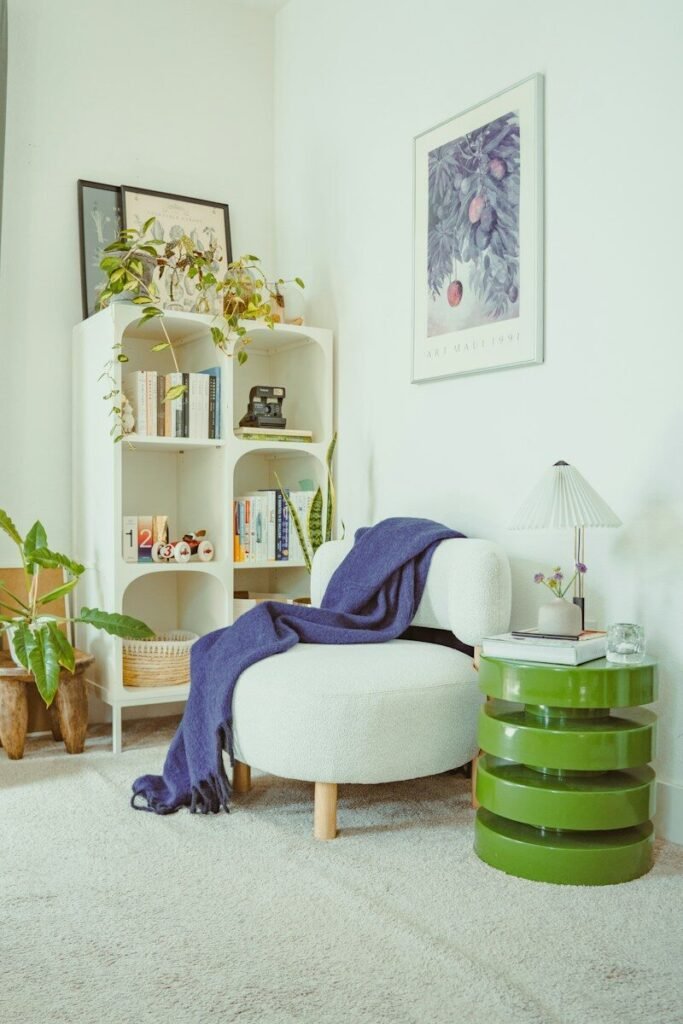
You do not need to make your whole home calm at once. Start with one corner — one chair, one small table, one lamp — and make it the calmest spot in the house. This is where you sit with a cup of tea, read a few pages, or simply rest for five minutes.
Choose a spot near a window if you can. Put a comfortable chair there, or a cushion on a bench. Add one soft blanket and one small table for a book or a drink. Keep the corner clear — no laundry, no chargers, no piles of paper. When a spot has only one job, rest, your mind starts to treat it that way.
Add one thing that makes you smile: a plant, a framed photo, or a candle you only light when you sit there. One personal touch is enough. Too many decorations make a corner feel busy, which defeats the purpose.
Once you know how good one calm spot feels, it becomes easier to clear the next surface, and then the next room. A calm corner is a small, daily reminder of how to make your home calmer — one chair, one lamp, one quiet spot. If you enjoy this kind of small change, you will like our ideas for how to make your home beautiful — the same gentle approach, room by room. Start with the room you already spend the most time in — that is where a calmer corner pays off fastest.
A Simple Evening Wind-Down
How your home feels in the evening sets how you sleep — and how the next morning starts. A ten-minute wind-down before bed is one of the easiest habits to keep, and it makes the morning reset much shorter.
First, do a quick version of the daily reset: clear the kitchen counter, load the dishwasher or wash the few dishes in the sink, and lay out what you need for the morning — keys, bag, clothes. A clear kitchen in the morning feels like a gift from the night before.
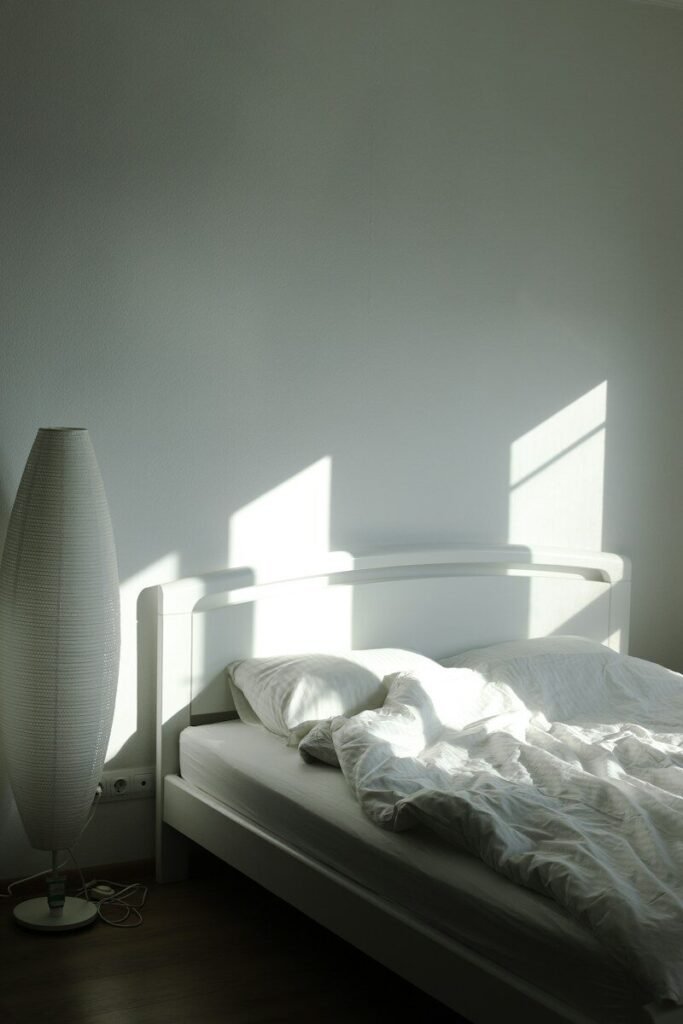
Second, dim the lights. Turn off the bright overhead lights and switch on a lamp or two. Lower light tells your body the day is ending, and it makes the rooms look softer and more settled.
Third, keep screens away from the bed if you can, and charge your phone across the room. A bedroom with a clear bedside table — one lamp, one book, one glass of water — is much easier to fall asleep in than one covered in clutter and cables.
Three steps, ten minutes, and the house is ready for the morning.
A Gentle Weekly Rhythm
Daily habits keep a home calm. Weekly habits keep it from slowly slipping back. Pick one small job for each day of the week, and keep the list short enough that you can actually do it.
For example, Monday can be laundry day, Tuesday the bathroom, Wednesday the floors, Thursday the fridge, and Friday one drawer or shelf. Saturday can be for anything that built up during the week, and Sunday can be a rest day — or the day you water the plants and open the windows wide.
The point is not to clean everything every week. The point is that nothing gets forgotten for a month. A fridge cleaned once a week never smells, and a drawer sorted once a week never overflows. Small, regular jobs beat big, rare ones every time, and that steady rhythm is a quiet part of how to make your home calmer for the long term.
Write your rhythm on a card and stick it on the fridge. If you miss a day, do not try to catch up by doing two days at once — just do today’s job tomorrow.
Mistakes to Avoid
Trying to do it all in one day. A whole-house deep clean in one day leaves you tired and the house messy again by Tuesday. Small daily habits last longer than big bursts.
Buying storage before clearing. New boxes and baskets do not make clutter disappear. They just hide it. Clear first, then buy only the storage you still need.
Using too many colours and patterns. A calm home usually has a simple colour scheme — one main colour, one second colour, and one small accent. Too many colours make a room feel busy, even when it is tidy.
Filling every empty space. Empty space is not wasted space. A clear shelf and a bare table give your eyes somewhere to rest. Leave some space empty on purpose.
Copying someone else’s home. A calm home should fit your life, not a photo on the internet. Make the rooms work for how you actually live.
Waiting for the perfect time to start. There is no perfect week. Start today with fifteen minutes.
Frequently Asked Questions
How long does it take for a home to feel calmer?
Most people notice a difference after the first week of daily resets. A deeper, lasting calm usually takes a few weeks of steady habits — calm comes from repetition, not from one big clean.
What if I only have five minutes a day?
Clear the kitchen counter, put away three things that are out of place, and fluff the sofa cushions. Even five minutes stops mess from growing.
Do I need to get rid of things to have a calm home?
Not necessarily. A calm home is about everything having a place, not about owning very little. If you love something and use it, keep it — just give it a home.
Can a small home feel calm?
Yes — small homes often feel calmer than large ones once they are organised, because there is less to manage. The keys are the same: clear surfaces, one calm corner, good light, and a place for everything.
Conclusion
A calmer home is not a project with a finish line. It is a habit — fifteen minutes a day, one clear surface, soft light in the evening, and a gentle rhythm through the week. Start with the daily reset, make one calm corner, and let the rest follow. Your home will not become perfect, and it does not need to. It just needs to feel like a place where you can breathe, rest, and start the next day well. That is what learning how to make your home calmer is really about — a home that works for your life, one small day at a time.