

Table of Contents
- What You Need Before You Start
- Your Hour-by-Hour Timetable to Repaint a Room in One Day
- How Much Paint You Need
- Choosing Low-VOC Paint
- Painting the Room Step by Step
- What Repainting a Room Costs
- Mistakes to Avoid
- Frequently Asked Questions
- A Fresh Room by Tonight
A fresh coat of paint is the fastest way to change how a room feels: new colour can make a tired bedroom look clean and bright, or a plain living room feel finished. A single standard room can be done in one day if the day is planned hour by hour. To repaint a room in one day, the real secret is not speed. It is order: prep first, cut in before you roll, and let the first coat dry.
What You Need Before You Start
Buy everything the evening before: a mid-morning trip to the paint store is the most common reason a one-day job spills into a second day.
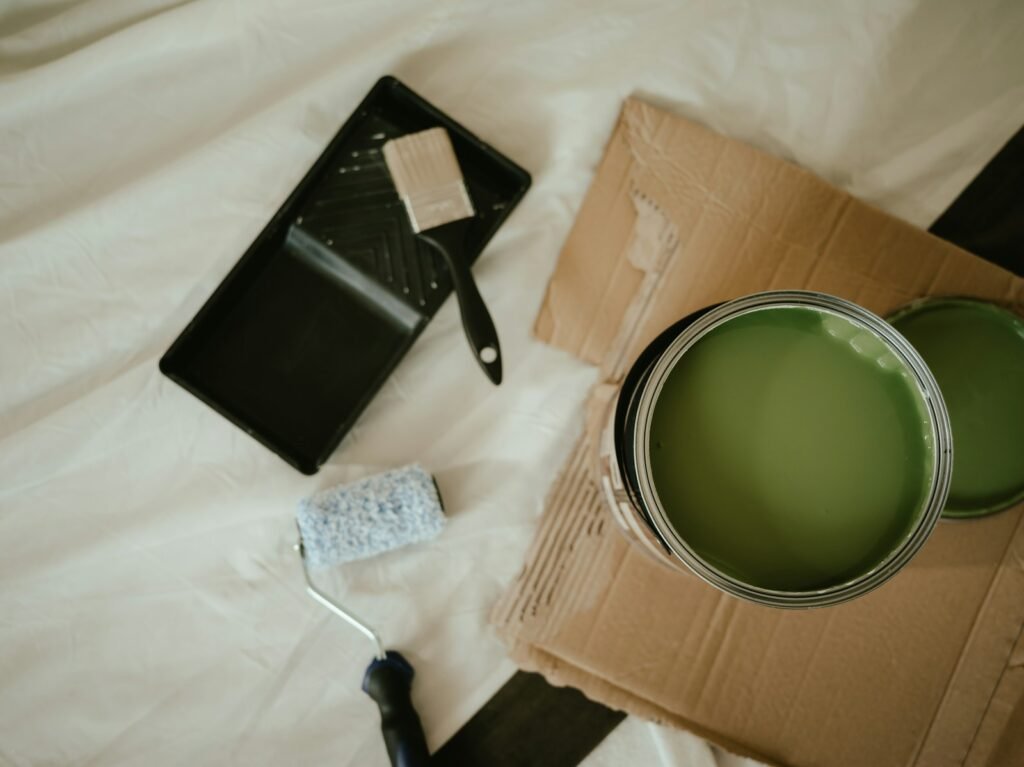
Paint and primer: wall paint, interior latex, eggshell or satin for most rooms; primer, only for bare drywall, patches, stains, or a much darker colour; painter’s tape, 1.5-inch; caulk and a caulk gun.
Tools: 9-inch roller frame with extension pole; 3/8-inch nap roller covers; 2.5-inch angled sash brush; paint tray; drop cloths; plastic sheeting; putty knife; spackle; 120-grit and 220-grit sandpaper; bucket, sponge, and mild dish soap; screwdriver; step ladder.
Pick your colour first. Paint a test patch the evening before and check it in daylight and lamplight. For
colours that work with the furniture you already own, see our guide to making your home beautiful.
Your Hour-by-Hour Timetable to Repaint a Room in One Day
This timetable runs from 7:00 AM to 7:00 PM.
7:00–8:00 AM — Clear the Room
Move small furniture and wall hangings out, and push large pieces to the centre under plastic sheeting. Remove outlet covers and hardware, and lay drop cloths over the floor.
8:00–9:00 AM — Clean, Fill, and Sand
Wash the walls with a sponge, warm water, and a few drops of dish soap. Fill nail holes and dents with spackle, let it dry, and sand smooth.
9:00–10:00 AM — Tape, Caulk, and Spot-Prime
Tape the ceiling line, trim, and baseboards, pressing the edge down. Fill gaps between trim and wall with caulk. Spot-prime every patch and stain.
10:00–11:00 AM — Cut In the First Coat
Stir the paint and cut in a 2- to 3-inch band along the ceiling line, trim, windows, and corners. Work one wall at a time and keep a wet edge.
11:00 AM–1:00 PM — Roll the First Coat
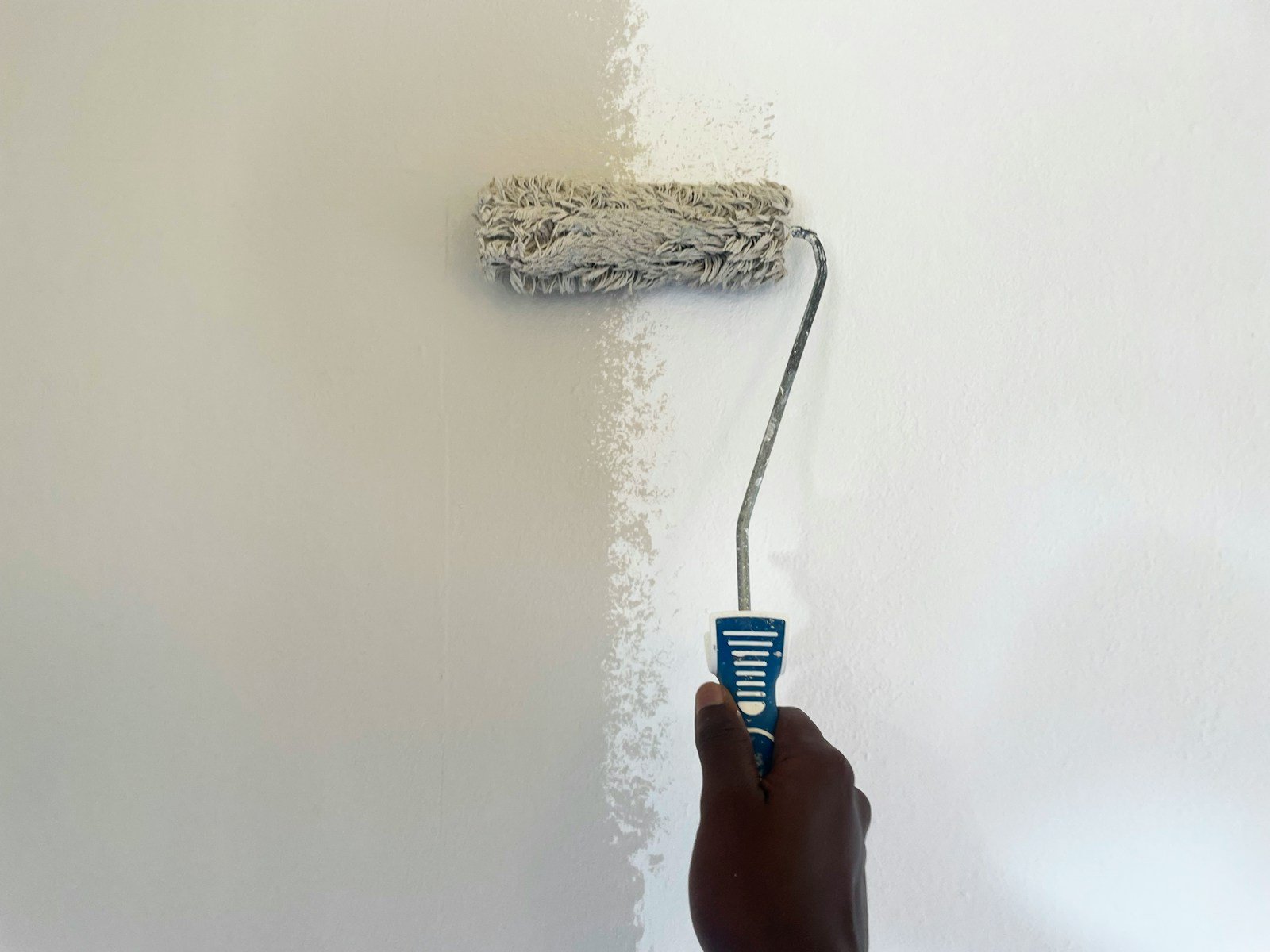
Load the roller evenly, roll off the extra, and work in sections 3 to 4 feet wide: roll a W shape, then fill it in. Overlap into the last wet edge, working top to bottom.
1:00–1:30 PM — Lunch Break
Stop and eat — latex paint needs time to dry before a second coat. Leave the windows open a few inches so moving air can carry the smell out.
1:30–2:30 PM — Check the First Coat
Check every wall in daylight and lamplight. If the first coat still feels tacky, wait: a second coat over it will pull paint off the wall.
2:30–3:30 PM — Cut In the Second Coat
Cut in all the edges again — it is faster the second time. Keep the band about 2 inches wide and work one wall at a time.
3:30–5:00 PM — Roll the Second Coat
Roll the second coat the same way as the first — this is where the colour becomes even, so do not rush it. If light over dark still shows through, add a third coat tomorrow.
5:00–6:00 PM — Paint the Trim
Paint the trim with a semi-gloss finish, which is tougher and easier to wipe clean. Paint the top edge of the baseboard first, then the face. Pull the tape off while the paint is still slightly damp.
6:00–7:00 PM — Clean Up and Move Back In
Pull the remaining tape off before the paint hardens, and reattach outlet covers and hardware. Move furniture back but keep it an inch or two from the wall overnight. Wash the brushes and rollers.
How Much Paint You Need
Guessing the amount is how one-day jobs turn into two-day jobs. Paintable wall area = 2 × (length + width) × wall height, minus 21 sq ft per door and 15 sq ft per window. Gallons = paintable area × coats ÷ coverage per gallon. Most interior latex paints cover about 350 sq ft per gallon per coat, so trust the number on your can.
Worked example: 12 × 12 ft room, 8 ft walls, one door, one window, two coats. Wall area: 2 × (12 + 12) × 8 = 384 sq ft. Subtract one door (21 sq ft) and one window (15 sq ft): 384 − 21 − 15 = 348 sq ft. Two coats: 348 × 2 = 696 sq ft. Gallons: 696 ÷ 350 = 1.99, so buy 2 gallons.
Two gallons is right for a standard 12 × 12 room with two coats. For a bigger room or a third coat, run the same formula with your own numbers, and always round up.
Choosing Low-VOC Paint
VOCs are volatile organic compounds, the chemicals that evaporate as paint dries and cause the strong paint smell. Low-VOC paint keeps that smell faint and short, so you can sleep in the room that night.
Look for the VOC level on the can: low-VOC and zero-VOC paints list it in grams per litre. This Old House recommends 50 grams per litre or less, and its guide to painting a room like a pro explains how to spot them. Zero-VOC is gentlest, but it still smells faintly for a few hours.
Low-VOC paint dries like regular latex paint: dry to the touch in about an hour, ready for a second coat in 2 to 4 hours. Full curing takes up to two weeks, so do not scrub the walls for the first week.
Sleeping in the room the same night is fine once the paint is dry to the touch and the room has had a few hours of ventilation. Anyone with asthma should wait one extra night.
Painting the Room Step by Step
Cutting in and rolling are two different skills: cut in first, then roll, one wall at a time, so the roller always meets a wet edge.
Cutting in: Dip the angled brush halfway up the bristles and tap off the extra. Hold it like a pencil and pull one long, steady stroke along the ceiling line or trim.
Rolling: Load the roller evenly and roll off the extra. Start each section with a W shape, then fill it in. Do not press hard: pressure squeezes paint out and leaves ridges.
Second coat and trim: Wait until the first coat is dry to the touch and the recoat time has passed, usually 2 to 4 hours, then cut in and roll again. Paint trim last with a semi-gloss finish. See Sherwin-Williams’ guide to the best order to paint a room.
What Repainting a Room Costs
Rough price ranges for a standard 12 × 12 ft room with two coats of wall paint:
| Item | Rough cost |
|---|---|
| Wall paint, 2 gallons, low-VOC | $50–$120 |
| Primer, 1 gallon (only if needed) | $15–$35 |
| Roller frame, extension pole, tray, and covers | $15–$30 |
| Angled sash brush, 2.5-inch | $10–$25 |
| Painter’s tape, 1 roll | $5–$15 |
| Drop cloths | $10–$25 |
| Spackle, sandpaper, and caulk | $10–$20 |
| Total, paint and supplies | $115–$270 |
Prices are rough ranges only and vary by brand, store, and region.
Buy only what the formula says you need, and reuse tools you own.
Mistakes to Avoid
- Skipping the prep. Paint highlights dirt, grease, and dents instead of hiding them.
- Skipping primer on patches and dark colours. They absorb the topcoat unevenly and show through as dull spots.
- Rolling over a dry edge. Once the cut-in band dries, rolling over it leaves a visible stripe called a lap mark.
- Painting in poor light. A wall that looks perfect under a ceiling light can show thin spots in daylight.
- Pulling tape off too late. Tape left on until the paint is fully hard can peel paint off with it.
- Putting furniture back too soon. Paint that feels dry is not fully cured.
- Buying too little paint. Use the formula, round up, and keep a little extra for touch-ups.
Frequently Asked Questions
Can I really repaint a room in one day?
Yes, for a standard room with four walls, one door, and one or two windows. The timetable runs from 7:00 AM to 7:00 PM, drying time included. It only slips if the room is much larger, the walls need heavy repair, or you are painting the ceiling and trim too — then split it over two days.
How much paint do I need for a 12 × 12 ft room?
About 2 gallons. The math is in the paint section above: 348 sq ft of wall, doubled for two coats, is 696 sq ft — 1.99 gallons at 350 sq ft per gallon.
Do I need primer before I repaint?
Not always. If the walls are in good shape and the new colour is similar, skip primer. You do need it on bare drywall, over patches, over stains, and when changing from dark to light — one coat stops the old colour showing through.
Is low-VOC paint safe to sleep in the room the same night?
Yes, once the paint is dry to the touch and the room has had a few hours of fresh air. Low-VOC paint smells much less, and the smell fades fast with the windows open and a fan running. Anyone with asthma should wait one extra night.
How long before I can put furniture back and hang pictures?
You can move furniture back the same evening, but keep it an inch or two away from the walls overnight. Wait at least a day before hanging pictures. Latex paint takes up to two weeks to cure fully.
A Fresh Room by Tonight
A room painted in a day is not about rushing. It is about the right order and giving each coat time to dry. Clear the room, prep properly, and cut in before you roll. Pick a low-VOC paint, open the windows, and by 7:00 you can look at a room that feels new — and sleep in it the same night. For a shade that works with your furniture and light, see our ideas for a welcoming living room.