

There is nothing like a tomato picked warm from your own plant. It smells sweet and tastes nothing like the pale, firm tomatoes from the supermarket — homegrown ones are softer, juicier, and full of flavour.
The good news is that tomatoes are one of the easiest vegetables to grow. With sun, water, and a little patience, anyone can have a harvest worth waiting for. The hard part is knowing where to start, and this blog post takes you through it step by step.
Table of Contents
- Choose the Right Variety
- How to Grow Tomatoes at Home from Seeds or Store Plants
- Prepare the Soil and Find the Sun
- Planting Your Tomatoes
- Watering and Feeding
- Support and Staking
- Dealing with Common Problems
- Harvesting Your Tomatoes
- Mistakes to Avoid
- Frequently Asked Questions
- A Small Garden, a Big Reward
Choose the Right Variety
What it is
Tomato varieties come in two main types: determinate and indeterminate. Determinate tomatoes grow to a set height and give you most of their fruit at once, while indeterminate ones keep growing and fruiting right through the season.
Why it helps
Choosing the right type makes the whole season easier. Short on space? Determinate types work well in containers and small beds. Want tomatoes all summer? Indeterminate types keep producing. And where summers are short, a short-season variety is the safest bet.
How to do it simply
For a first tomato plant, try a cherry tomato such as Sweet Million or Sungold — they are forgiving and ripen early. For slicing, try Early Girl or Celebrity; for sauce, Roma is a good choice. Buy from a local nursery if you can, because its plants are already suited to your climate.
If you grow from seed, check the packet for disease resistance. Codes such as V, F, N, and T mean the variety resists common tomato diseases — a small detail that saves a lot of trouble later.
How to Grow Tomatoes at Home from Seeds or Store Plants
What it is
Starting tomatoes from seed: small seeds sown indoors, in trays, six to eight weeks before the last frost. Starting from store plants: young tomato plants bought from a garden center, already hardened off and ready to plant.
Why it helps
Starting from seed gives you the most choice of variety, costs less, and lets you start early. Buying a store plant is the easiest option for a beginner — a healthy one has a head start over a seed and can go out as soon as the weather warms.
How to do it simply
To start from seed, fill small pots or trays with seed-starting mix and sow two seeds per pot, about a quarter of an inch deep. Water gently so the soil stays moist, and keep them somewhere warm — 65 to 75 degrees Fahrenheit is ideal. The seeds should sprout in about a week, and once you see seedlings, give them as much light as you can.
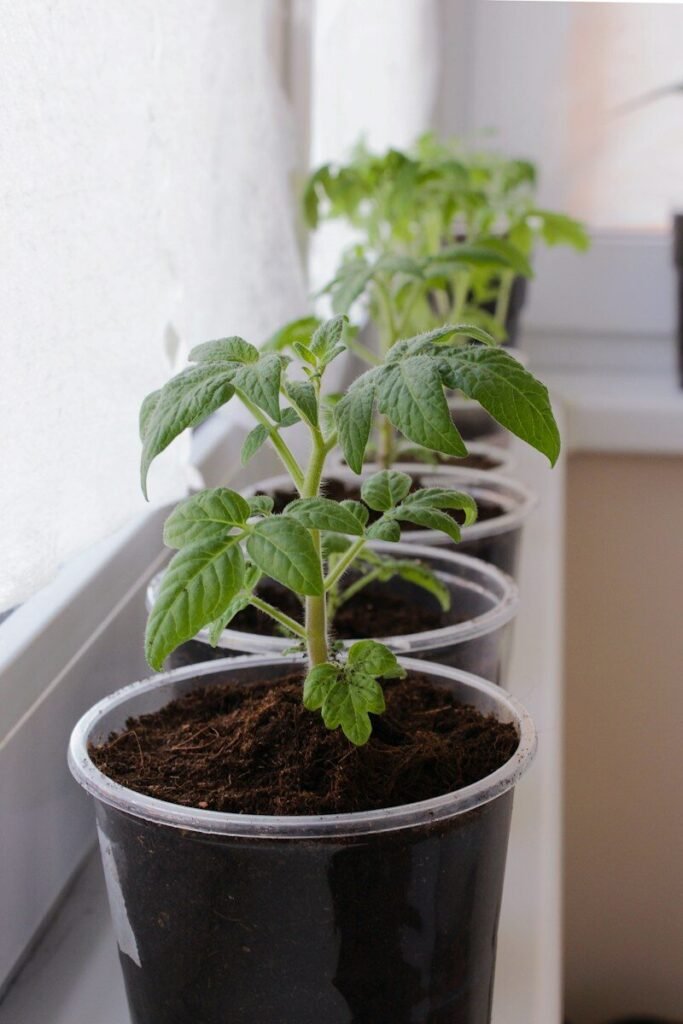
When the seedlings are about three weeks old, move them to larger pots with potting mix and keep them indoors for another few weeks. Before moving them outside, harden them off: set them outside in the shade for a few hours a day.
To transplant, pick a sunny day after the last frost. Dig a hole deep enough that the lowest leaves sit just above the soil, set the plant in, fill the hole, firm the soil gently, and water well.
Prepare the Soil and Find the Sun
What it is
Rich, well-drained soil with plenty of compost, in a spot that gets direct sun for most of the day.
Why it helps
Tomatoes need six to eight hours of direct sun a day, so choose the spot before you plant — that much sun is the first ingredient; without it, even the best soil cannot make up for shade. Rich soil with plenty of compost feeds the roots and holds water in the soil longer.
How to do it simply
Before planting, mix two to three inches of compost into the top six inches of soil. In pots, use a good potting mix with compost — not garden soil on its own, which drains poorly.
Cost and effort: low cost for a small bag of compost. Do not plant in the same spot each year — rotate your tomatoes to a fresh spot each season, to avoid soil-borne pests and diseases.
Planting Your Tomatoes
What it is
Placing your young plants in the soil, deep enough that the lower stem is buried and roots can form along it.
Why it helps
Tomatoes are unusual: they can grow roots along any part of the stem that is buried. Planting deep gives the plant a bigger root system, so it grows stronger and needs less watering later.
How to do it simply
Dig a hole deep enough that the lowest leaves sit just above the soil. Pinch off the lowest leaves first, leaving a few at the top, then set the plant in, fill the hole, and water well.
Give plants enough space to grow: cherry tomatoes can go about two feet apart, while larger slicing types need three feet. Space means good air flow, which helps prevent disease.
Watering and Feeding
What it is
Watering the plant at the base, in the morning, so the soil stays moist and the leaves stay dry, with a little plant food added now and then.
Why it helps
Tomatoes need steady water. If the soil dries out and then floods, the fruit can split or develop a dark patch at the bottom. Watering at the base keeps the leaves dry, which helps prevent disease.
How to do it simply
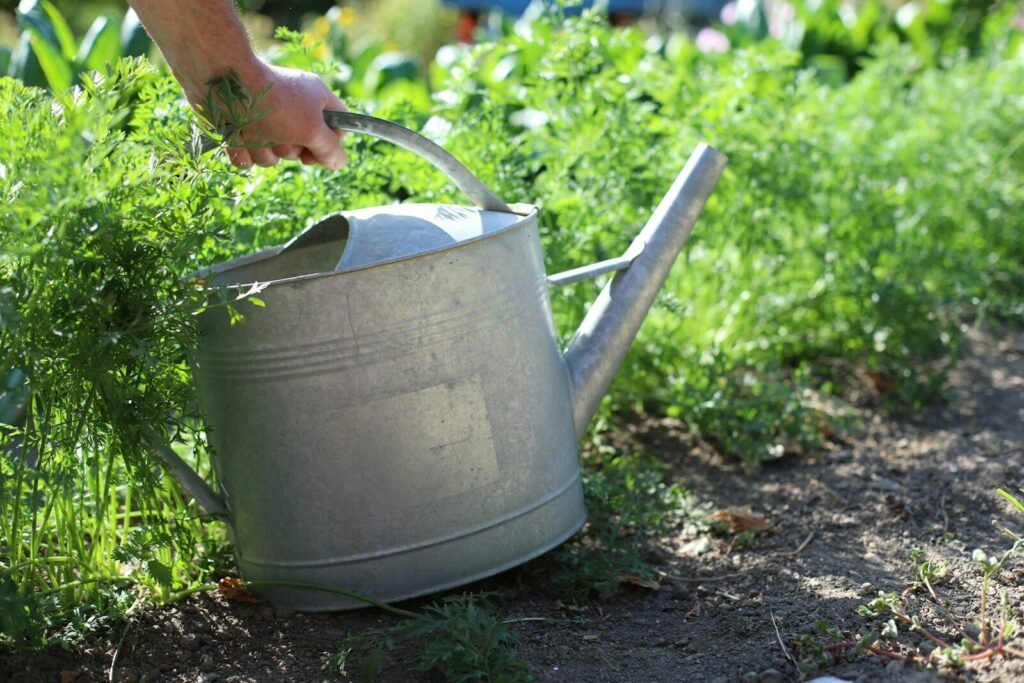
Water at the base of the plant, not the leaves and not from above, right after planting. Once the plant is settled, water deeply once or twice a week, depending on the weather — in a heat wave, you may need to water more often. Morning is best, so any wet leaves dry quickly and do not stay damp for long.
Cost and effort: low cost for a little organic fertilizer or compost tea. In dry weather, water containers every day, because pots dry out much faster than garden beds.
Support and Staking
What it is
Stakes, cages, or strings that hold a tomato plant upright and keep the fruit off the soil.
Why it helps
Tomato plants grow heavy with fruit. Without support, a heavy plant bends, and the fruit ends up resting on the ground, where slugs and rot can reach it.
How to do it simply
Put the stake or cage in the ground at planting time, so you do not damage the roots later. Tie the plant loosely with soft twine as it grows, and check the ties every week.
Dealing with Common Problems
What it is
Common tomato problems: yellow leaves, blossom-end rot, cracked fruit, hornworms, and blight.
Why it helps
Every tomato grower faces a few problems. The good news is that most have a simple cause and a simple fix, so you can handle most of them without any chemicals.
How to do it simply
If lower leaves turn yellow, check the soil moisture first — it is usually too wet or too dry. Pick the yellow leaves off and water at the base, not from above. If the soil is too wet, let it dry out before watering again.
If you see a large green caterpillar with a horn, it is a tomato hornworm. Pick it off by hand in the morning, when it is easy to see, and drop it in a bucket of soapy water. Look for small white eggs on the leaves too.
If the problem keeps coming back, the University of Minnesota Extension tomato guide explains common diseases and what to do about them. It is a good place to check before you treat anything.
Harvesting Your Tomatoes
What it is
Picking tomatoes when they are fully ripe — red, firm, and fragrant — or a little green for cold storage, where they can ripen later.
Why it helps
Picking at the right time is the reward for the whole season. A tomato picked too early will ripen, but it will never taste as good as one left on the plant until it is fully ripe.
How to do it simply
Pick when the tomato is fully red and gives a little when you press it gently. Twist it off the stem, leaving the small green star on top, and lay the tomatoes in a single layer, not stacked.
If a cold snap is coming, pick the green tomatoes and let them ripen indoors on a sunny windowsill. A paper bag with a ripe banana speeds them up.
The Old Farmer’s Almanac tomato guide covers varieties, problems, and harvest times in one place. It is a handy reference to keep through the season.
Once the tomatoes are in, enjoy them with the rest of the home. There are simple ways to make your home beautiful that work with the same small-step approach. Small steps work the same way indoors as they do in the garden.
Mistakes to Avoid
- Starting seeds too early. If you sow seeds too soon, seedlings grow leggy, pale, and weak. Start six to eight weeks before the last frost.
- Planting before the last frost. Tomatoes die in cold weather. Wait until the soil is warm and frost is past before you set plants outside.
- Watering from above. Wet leaves invite disease. Water at the base of the plant, and avoid wetting the leaves.
- Using too much fertilizer. Overfeeding makes lots of leaves and few tomatoes. Once plants start to flower, switch to a low-nitrogen feed, or use compost instead.
- Skipping stakes or cages. Unsupported plants fall over and fruit rots on the soil. Support the plant at planting time.
- Planting in the same spot every year. Rotating tomatoes to a new bed each year helps prevent soil-borne disease.
Frequently Asked Questions
How long does it take to grow tomatoes from seed?
From seed sowing to harvest, about 65 to 90 days, depending on the variety. Starting with a larger nursery plant skips the seed stage.
Can I grow tomatoes in pots?
Yes. Use a large pot, at least 12 inches wide and 12 inches deep, with drainage holes. Determinate types grow best in pots — water daily in hot weather and feed every two weeks with a tomato fertilizer.
Why are my tomato leaves turning yellow?
There are several possible causes, but the most common is water. If the soil is too wet or too dry, leaves turn yellow — check the soil before you water; it should be moist, not wet or dry. In a pot, also check that the drainage holes are not blocked.
How much water do tomato plants need?
About an inch of water per week, depending on the weather — more in hot, dry spells. Check the soil with your finger: if the top inch is dry, it is time to water.
A Small Garden, a Big Reward
Learning how to grow tomatoes at home is a rewarding skill. You get to eat the results of your work, and growing food is a simple way to feel connected to your home and garden.
Start with one small raised bed or one large pot. Choose a sunny spot, use a good soil mix, and water regularly. Then sit back, watch your tomato plant grow, and enjoy the harvest at dinner. The first ripe fruit is worth the wait.